Thursday, June 8, 2017

The Communist Manifesto of The Doctor


STORY 271: OXYGEN

I'm really split on Oxygen.  On the one hand, I found it well-crafted, effectively filmed, with a logical conclusion.

On the other, I found it bordering on if not actual propaganda, something that might have been approved by Stalin, Mao, or the Kim Monarchy in North Korea. 

This split is causing me to look at Oxygen with two sets of eyes, those of a critic and those of someone who hates seeing overt messaging in film/television (even if I agree with them).  I am highly bothered by the messaging in Oxygen, both the way it is done and the message itself.  I detest it when programs are used for propaganda whatever the intent.  Maybe in the ensuing moments, I can find myself looking at Oxygen again with yet another set of eyes.

And none of that is meant to be a pun or commentary on the ending of the episode. 

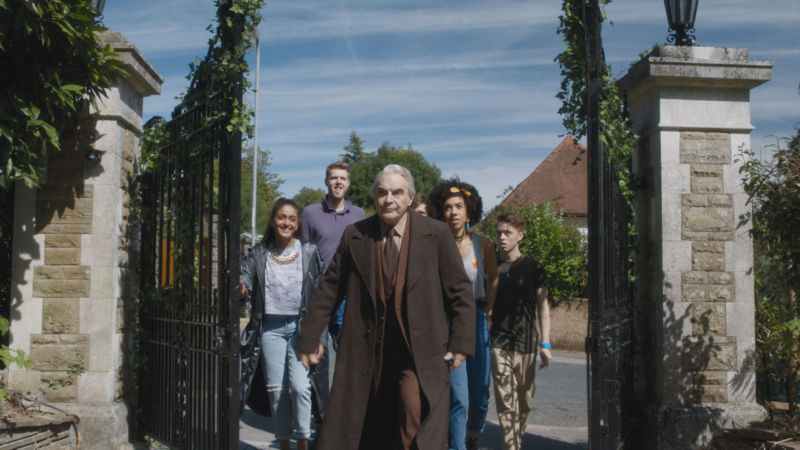
The Doctor (Peter Capaldi) and his Companions Bill (Pearl Mackie) and Nardole (Matt Lucas) respond to a distress signal in space over Nardole's objections.  He is adamant that they remain on Earth to guard The Vault, but the Doctor's wanderlust and Bill's desire to see more of the universe overrule him.  Once on the station, they find that the oxygen is not there for their use.  It is a commodity, one that they have to pay for.  As they are using unauthorized oxygen, it must be expelled.

The Doctor manages to stop them getting sucked out into space but now are beyond the reach of the TARDIS.  The only way to safety is to find the four survivors, but that means putting on spacesuits that are not in the best of conditions, and that have low oxygen.  Making things worse are the zombies in spacesuits who are following the suits directives to eliminate the organisms within them.

At first, the Doctor thinks there was a wild malfunction in the spacesuits, but as time goes on, after interacting with the survivors and trying to keep them all alive, he realizes that there was no malfunction.  The rescue ships that are coming are not actual rescue ships.  They are the crew's replacements.

Far from being a glitch, the spacesuits worked exactly as they were programmed to do.  In a universe where oxygen is sold at 'competitive prices', the unnamed Corporation decided the most cost-effective thing to do is literally kill its employees and bring in new ones.  The Doctor decides to rig the machine to make it cost-ineffective to kill the few survivors, no easy task given that in order to save Bill, he lost his sight.  Even harder when you think Bill has been killed by the zombies.

In the end, they all return.  Bill is thrilled, Nardole is angry and berates the Doctor over his actions and orders him to "LOOK AT ME!"  Sad that he can't...for he is still blind.

 
There is a great deal to admire with Oxygen.  Jamie Mathieson wrote two of the best Capaldi-Era Doctor Who episodes (Mummy on the Orient Express and Flatline), and here again he delivers a pretty quality-level script.  The resolution to the crisis is remarkably logical, built on thought and reason versus other Doctor Who tropes (love saves the universe).  Chris Palmer's direction was equally effective: the flight from the zombies from an oxygen-deprived Bill is tense and almost nerve-wracking (aided by the fact that there is no music to make it dramatic, both trusting the moment is dramatic enough).

Oxygen is helped immensely by Mackie's performance.  She is really coming into her own as Bill, both the enthusiasm and the fear her character has.  The moment when the Doctor asks her if she trusts him and he seemingly leaves her to die is almost terrifying, and seeing her 'die' is almost shocking.

Mackie also is allowed moments of humor, when she meets Dah-Ren (Peter Caulfield), a Blue Man group reject.  Her surprise at seeing a blue-skinned figure is undercut with his remark that they had to 'rescue a racist', surprising our biracial lesbian.  Her insistence that she not only isn't a racist but usually on the receiving end clearly puzzles Dahh-Ren, who wonders how that is possible.

However, a lot of Oxygen is undercut by Mathieson's anti-capitalist screed.  When the trio first arrive, they are hailed as being from "the Union", which one of the survivors insists is a myth.  In this part of the universe, the Union will save them from the murderous Capitalists, before they have a revolution and set up a collective.  The messaging behind Oxygen is blatant, in-your-face, and even if I held to the idea that capitalism is downright murderous (which, unchecked by morality, it can be), there is something in me that highly dislikes overt political messaging.

I find that the best type of science-fiction as allegory works when it can be read both ways: both as the surface story and as a commentary on the times.  The worst types are the ones that are overt and obvious, like Oxygen.

I think there would have been nothing wrong with the original supposition that the spacesuits malfunctioned.  You could even have it to where there was sabotage to benefit one of the survivors.  However, the fact it was this distant, remote Corporation does not make it a real threat, even if Mathieson holds capitalism to be the ultimate evil.  

I look on stories like the Third Doctor stories The Silurians and Inferno.  Both were political and had a firm left-wing viewpoint.  However, they could also be seen as mere adventure stories, one where the politics did not overshadow or overwhelm the basic story.  Oxygen is not on that level.  It could have been, but it chose to put its own political viewpoints ahead of the story.  That knocks it down, and even if I agreed with the point of view of Oxygen, I would still be bothered with it. 

Oxygen brings to mind two other episodes that covered similar grounds: the Fourth Doctor story The Sun Makers and the more recent Sleep No More.   The former was also about a group of oppressed workers and the evil Corporation that was taking advantage of them (though it was more through high taxation than through oxygen depravation).  In the latter, it was a group of zombie-like creatures on a spaceship.

Still, on the whole Oxygen was a remarkably strong episode, one that I would thought higher of if not for its overt propaganda.  I can imagine this coming out of Soviet Russia, and I figure the Chinese would hold Oxygen up as a reason to keep the Communist Party in charge.  Its blatant propaganda is something to give pause on.

In the end, I've decided to metaphorically split the baby.  The pluses of Oxygen (tight script, strong performances) balance out the minuses of Oxygen (a ham-fisted anti-capitalism message, a sense of deja vu with The Sun Makers).

5/10


Next Story: Extremis

Friday, June 2, 2017

The Wooden Figures of The Doctor


STORY 270: KNOCK KNOCK

Knock Knock, at its core, is about accepting death and change.  If it weren't for some odd bits of logic lapses, it would be among the best 12th Doctor stories.  As it is, it is still quite good, helped by a strong turn by David Suchet.

Bill Potts (Pearl Mackie) finds that she wants to live a more independent life.  As such, she joins five other college-age people in search of suitable digs.  Nothing comes their way until a mysterious figure (Suchet) comes along, offering a large mansion, complete with tower, for a ridiculously low rent.

These kids, being kids, immediately sign and move in.  The Doctor (Peter Capaldi) comes along and immediately suspects something is amiss.  Bill insists there is nothing supernatural or otherworldly about finding a very large house to let with a very creepy Landlord for a very low price.  Not even the fact the house doesn't get Wi-Fi seem to be a bother.  As far as Bill's concerned, things couldn't be better.

Caveat Emptor, says I, for soon things begin to go bump in the night.  It looks like all the flatmates are disappearing into the house itself, and the house is devouring them one by one.  The Landlord essentially confirms this, as does the presence of alien bugs that live in the wood and eat them one by one.

The Doctor discovers that every twenty years starting from 1957, a group of six tenants comes along and disappear, and now it is 2017's turn to be sacrificed.  The Landlord insists this has to be done to keep his daughter alive.  The Doctor convinces the Landlord to let him look in on the patient.

The patient, Eliza (Mariah Gale), we find is actually not the Landlord's daughter.  It's actually his mother, whom he has kept alive since 1947, when as a child he brought the bugs, unaware of their power.  He soon found that they preserved his mother in wood, and thus he has been luring people to their doom.  The Doctor triggers Eliza's memories, and she and The Landlord soon are consumed by the bugs, for it is both wrong and their time to go.

This releases all of the 2017 flatmates and they escape.  We end with Nardole (Matt Lucas) leaving his shift at The Vault with the Doctor coming into it, offering 'whatever is inside' dinner while listening to the prisoner play a piano.


Alas, my enjoyment of Knock Knock gets knocked down if you take the time to think on the odd turns of logic within it. 

These disappearances, taking place every twenty years, were never investigated?  In 1957, or 1977, or 1997, no one ever checked on the six people devoured by the Landlord's mansion?

I figure they had families and friends, but apparently no one ever bothered with them, seeing that the police never connected the fact that all six were last seen having one thing in common: the Landlord's house.

Is it a little convenient that Eliza would forget that she was the Mother and not the Daughter?  Did she ever question why she was made of wood, or did she not notice? 

She had been dying since 1947, so what exactly did she do for 70 years?  Seems a rather dull life just being locked away all that time (not even a television set to entertain old Mother Wood).

What exactly did the Landlord expect to do when he died (which as far as I know, the bugs weren't about to preserve him, at least not in human form)?  As a side note, he pretty much seems to have wasted his life preserving dear old Mummy, though to be fair, Knock Knock brought to mind a friend of mine.

He'll be 56 this June and he still grieves his mother who died last year.  He lived with her his whole life, has never married or had children, and recently said that it might take him the rest of his life to overcome her death.  My view is that this is unhealthy for him, and that such postmortem devotion veers close to obsession.  My friend, like The Landlord, might have taken this bizarre step from ever seeing his mother die, but it seems almost cruel to keep her in this form. 

Yet I digress.

Between 1947 and 1957, when the first sacrifices were made, who raised him?  If he had a father or even another relative (aunts/uncles, siblings, cousins), that might have kept the grief down.  It's not as if he could be literally left an orphan without anyone noticing.

An excuse used to not notice the absence of one of the flatmates, Pavel (Bart Suavek) is that whenever he moves somewhere new, he locks himself in his room for days on end.  Aside from this being really weird (doesn't go for food or the restroom), the flatmates don't seem bothered or notice that his record player is stuck in a groove for hours.  That excuse is a pretty weak one to explain away his disappearance.

Yes, Knock Knock does leave a lot of questions that on examination, either need a great deal of explanation or don't hold up.  There is another aspect of Knock Knock that disturbed me greatly, more than any plot holes of leaps of logic.


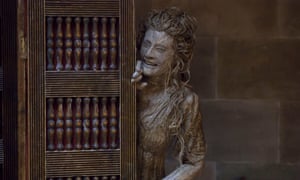
I get that Knock Knock is meant to be creepy, even downright scary.  However, I wonder if it is too scary for children, too graphic in what we're presented.  Seeing Pavel caught up in the wooden wall is downright grotesque, an image that I found highly disturbing.  I imagine children might have been downright terrified at the image.  The sight of the bugs devouring the others was also perhaps a bit much. 

Those two images, I think, might have been pulled back or altered, as I found them more graphic than necessary, especially for children. 

Again, if one gets past the various points of logic or the somewhat gruesome aspects of Knock Knock, the episode can be seen as a positive.  At the very top of the list of positives is David Suchet's performance.  Suchet is one of the best actors of his generation, and to many (including myself), he's the definitive Hercule Poirot (sorry, Albert, Peter, and soon enough, Kenneth).   He makes the Landlord creepy but also sad whenever the plot requires him to be.

Mackie and Capaldi have proven to be a great fit as Companion and Doctor respectively.  More than smart-alecky Clara, who was at times insufferable, Mackie's Bill is fun, smart without being a know-it-all, and comfortable in her own skin.  Her gentle way of telling one of the guys who fancied her that she couldn't fancy him was handled well without making a big spectacle of her "I'm GAY!" reality.  Their interplay when she attempts to pass The Doctor off as her 'Grandfather' (to the irritation of the Doctor, who wouldn't have objected to "Father") is funny without being ridiculous.

Apart from certain points of logic, a more graphic set of visuals, and the tired 'everyone lives' trope, Knock Knock displays far more positives than negatives.  A great performance by David Suchet, great work by Mackie and Capaldi, a strong sense of the creepy old house: all worked together well.  It might have been better if Knock Knock had been a two part story to allow for a less rushed feel, but on the whole it is a step above what we've seen before.

I thought long and hard about my ultimate feeling for Knock Knock.  I was disturbed by the graphic nature of some of it, and question a lot of the logic behind it.  However, with some work this season of Doctor Who has proven so far to be a much better, much stronger one.

Knock on wood.


7/10

Next Story: Oxygen

Tuesday, May 30, 2017

Aragon vs. Anderson: Robot of Sherwood


Now that I have a few minutes free, I thought I'd go back to one of my great passions...bashing The Whorist (or as it's generally known, The Nerdist), in particular their Doctor Who reviews by one Kyle Anderson.

Mr. Anderson (now doesn't that sound sinister) in my view, has rarely if ever met a Doctor Who post-Rose story that he hasn't loved. I don't mean liked. I mean L-O-V-E-D, to where that particular episode is the Best Doctor Who Episode of All Time...until the next episode when THAT becomes the Best Doctor Who Episode of All Time. It's gotten to be almost a point of parody to see how Anderson rarely finds fault with a Doctor Who episode. I don't mean just to nitpick on a few things. I mean give a bona-fide negative review. Even I, someone who has been vociferous in my condemnation for many NuWho episodes, do admit when I see a good one (like Flatline or Mummy on the Orient Express). Anderson, however, will almost always find something to wax rhapsodic about, even on something as atrocious as In the Forest of the Night.

I was intrigued by this, so a little research was required. I went as far back as I could regarding Anderson's Doctor Who reviews, and the earliest one I could find was the Series/Season Six opener, The Impossible Astronaut. What I've done is taken Kyle Anderson's review verbatim, and offered my own 'translation' to the text to see what Anderson is, in my view, really saying. I also throw in my own thoughts as to what is being said.

I hope this will be a fun and informative journey into the strange mind of the Functioning Nerd.

I present Part 33 of The Nerdist as Whore: Robot of Sherwood. My 'translations' are in red.


Comic adventures are not the most common kinds of stories in Doctor Who, and the ones that have existed in the new series have tended to go for zany rather than funny. It’s a difficult tone to strike, and really the show hasn’t done it super well since the 1960s.

"Deep Breath" had a lot to do, and that fact that it did that, plus added wackiness, cracking dialogue, and tense if not downright terrifying moments just solidified once again why this is my favorite show.

Is it me, or is there something just a bit, well, odd, about saying how Doctor Who hasn't done 'comedy' "super well since the 1960s" and also say that Deep Yawn, a mere two episodes ago, managed to do 'wackiness' so well?  Perhaps 'wacky' is his 'zany', and thus, not in the 'comedy' genre, so I think we can cut him some slack.

Still, most modern Who is funny despite the terror, but this week’s episode, “Robot of Sherwood”, is just funny all on it’s own.

Grammar Police Alert: "It's" is a contraction of 'it is', not the possessive form of 'it', which is written 'its' (without an apostrophe).  Unless of course he meant to say that "'Robot of Sherwood', is just funny all on it is own".

I don’t remember the last time I smiled that much throughout an episode.

My guess would be when you saw Into the Dalek, since you liked that one too (just like you like almost all of Moffat-Era Who: 28 out of 33 positive reviews so far for our 'analytical critic' who is 'quite critical' when necessary).

It was just so delightful with its dialogue and not-quite-over-the-top silliness,

Geez, if Anderson thought Robot of Sherwood was 'not-quite-over-the-top silliness', one can only wonder when he thinks something IS well over-the-top!

but it also tells a good message about not giving up on legends because any hero can be real so long as they inspire heroism in others.


There is a marked difference between believing in mythological heroes enough where they inspire heroism...and believe that they are actual, historical figures that existed in real life.  My heroes as a child were Underdog and Indiana Jones, but even as a child I knew they didn't actually exist.  Robot of Sherwood is making the claim that "Robin Hood" was a real as Richard I or Winston Churchill.  If the Millennials cannot make that distinction, then it is proof positive that Common Core is a disaster.

My gosh, what an ep!


My gosh, what rubbish!

Written by perennial writer Mark Gatiss and directed by newcomer to the series Paul Murphy, “Robot of Sherwood” does what few episodes have done before, which is to blend comedy and adventure in a way that isn’t dumb,


and to let the series for once be about a “fictional” character from the past.


The quotation marks around "fictional" are enough to inspire derision for anyone who claims to be 'analytical' on this topic.

Being the huge classic series fan that he is, surely Gatiss was channeling a bit from the First Doctor story “The Myth Makers”, in which the Doctor and companions go back to Ancient Greece in the middle of the Trojan War and inadvertently cause the events surrounding the Trojan Horse, which the Doctor claims would never work because it’s just an Epic Poem. Of course, this episode forsakes “The Myth Makers”‘ horribly tragic ending

...because we all know The Trojan War was a knee-slapping bit of comedic hijinks...

and just stays with the swashbuckling adventure theme.
Clara wants to go meet Robin Hood, one of her favorite historical figures, but the Doctor tells her he’s just a myth and she’d be disappointed, then trying to get her to want to see the Ice Warrior encampments on Mars (bo-ring).

Now, let me see if I have this straight.  Clara is a teacher, which suggests she has a basic knowledge of various subjects and is educated.  This "teacher" also believes Robin Hood is a real, historic figure, someone who actually existed in real life.  Is it me, or do these two ideas fail to be logical?  Oh, I forget...Doctor Who is never and has never been about 'logic', not even internal.  It's about how it makes you 'feel'. 

Clara insists and the Doctor sets the TARDIS controls to Sherwood Forest, 1190AD-ish. He exits expecting to be 100% correct and is immediately met by Robin Hood (Tom Riley). That can’t happen, right?

Isn't it extraordinary that The Doctor managed to set the coordinates to where they would so easily stumble across a fictitious character just wandering about.  What Ever Are the Odds?  Is "1190 AD-ish" now the standard for accurate time-travel?

He’s just as brash and prone to fits of derisive laughter as his myth and Hollywood movies would lead you to believe.


Robin Hood: Prince of Thieves and Robin Hood with Russell Crowe didn't have a laughing, preening lead, Kyle.  Come to think of it, Errol Flynn's version in The Adventures of Robin Hood didn't have HIM laughing all the time either.  There were times in that film where Robin was quite serious and somber (let alone romantic with Maid Marion).  Maybe the Douglas Fairbanks, Sr. version can have this 'brash and prone to fits of derisive laughter' style, but this interpretation, EVEN if I grant you was a 'real' person, is more based on a stereotype of Robin Hood than myth or even Hollywood movies.

The Doctor asks if laughing ever got him punched in the face (hilarious) and the Prince of Thieves says he’s going to still the bony man’s blue box,

He's going to 'still' the bony man's blue box?  Why?  Is it moving?  Why would The Prince of Thieves want to 'still' anything?  Now THAT makes ME laugh!

despite Clara and her period-appropriate attire and her undeniable glee that they’d found Robin Hood so quickly.

A detail we need not bother questioning.

Robin draws his sword and the Twelfth Doctor

...in 14th Form...

shows what he’s made of by drawing his own weapon… a spoon.

The Twelfth Doctor in 14th Form is going to fight off a fictional character...with a spoon.  Remind me again, Kyle, this Doctor is supposed to be a 'darker' Doctor, right?
After the duel ends, Robin takes both of our heroes to meet the rest of the Merry Men (what an apt name for them) and the Doctor still thinks something is wrong and that these people aren’t real. They can’t be!

BECAUSE THEY'RE BLOODLY WELL NOT REAL!

He thinks they might all be in a Miniscope (reference to Third Doctor story “Carnival of Monsters”).

A story most NuWhovians have never seen, probably never heard of, and have no interest in.

Clara asks when he stopped believing in legends, and he asks when she started believing in mythical heroes.


I usually put that around 8 to 12.  Next thing you'll know, Doctor Who will say Santa Claus is real...

“Don’t you know?” is her very heavy reply.


She then talks to Robin and he tells her everything she already knows about his own mythos and that it was Maid Marian who convinced him to stand up to Prince John’s tyranny.


If memory serves right, in the movie The Adventures of Robin Hood (which Robot of Sherwood is shamelessly drawing from), Maid Marion was firmly on the Norman side and against Robin of Locksley, until she saw both how cruel some Normans were against the Saxons and that the divisions between Saxon and Norman was wrong.  They were all English now.  However, we'll go with Clara's version.

She also knows she’s sad because, the Doctor’s right, he laughs too much.


This sentence is a little confusing.  "She also knows she's sad," makes it unclear whether 'she' refers to Clara or Maid Marion.  For the longest time, I read it as "She also knows he's sad," since Anderson refers to Robin Hood as the "he" in "he laughs too much".  I figure it's a typo, which is not a terrible thing.  We all make mistakes when expressing ourselves.  I know I have (and will in the future).  However, this is the second or third curious error so far in this brimming press release that passes itself off as an objective review. 
If this is Robin Hood, there must also be a Sheriff of Nottingham, in this case played by guest star Ben Miller. He’s pretty darn evil all right. He has set up the famous archery match as a trap to catch Robin Hood. Naturally, Robin does amazingly well and is about to be awarded the golden arrow when another arrow splits his own. It was fired by the Doctor who doesn’t want the arrow, he wants something else. What follows is an increasingly ridiculous show of skill between the Doctor and Robin until finally, Robin reveals he is indeed who he says and the Sheriff’s knights attack. One gets its arm cut off and then the Doctor knows he’s right. He allows himself, Clara, and Robin to be captured because capturing is the best way to find out what someone’s evil plan is.
What follows is one of the funniest and best scenes in the episode, which is already pretty amazing with Capaldi-awesomeness.


It’s all about the Doctor and Robin Hood trying to out-hero each other with regard to coming up with the better escape plan. Neither of them have anything, and Clara knows it. The sheer amount of bickering is enough to driver mad;

"The sheer amount of bickering is enough to driver mad".  Is this the fourth error in an increasingly badly-written review?  Was it written with some type of Auto-Correct system that made erroneous choices?  I figure he meant to write "driver her mad", but the growing number of odd sentences is making this more and more hilarious than Robot of Sherwood itself. 

luckily, she is taken to see the Sheriff pretty quickly, and the Doctor and Robin are left to come up with something.
Clara is a genius!


Ah, yes.  I'm old enough to remember when The Doctor was the genius, the Companion less so, but Times Have Changed.

She manages to trick the Sheriff into telling her what happened with lights in the sky and the robots and everything. He wants to use them to overthrow Prince John and become king not only of England, but of the whole world, after Lincoln of course.

Villain wants to TAKE OVER THE WORLD.  Now that's new.

The Doctor and Robin do manage to escape and, after removing their shackles (the Doctor makes a joke and regrets it when Robin laughs), they find the control room. Seems the castle itself is a spaceship and its engines need repairing, in the form of gold.

One thing is certain: no Cybermen were involved in the making of Robot of Sherwood.

They were looking for the Promised Land too. Weird, eh?


A fellow reviewer made an interesting point about this season-long thread: since when do robots have a concept of "The Promised Land" or "Heaven"?  Details, details...

The robots databanks have a history of Robin Hood (including a picture of Patrick Troughton as Robin Hood in Robin of Sherwood from which this episode gets its name) and he thinks this is definitive proof that Robin isn’t real, but when the Sheriff bursts in and the robots begin firing on Robin, the knave takes Clara and jumps out the window into the moat below. The Doctor is then captured.

So let's see if I have this straight (again).  Doctor Who is going to make a story out of the fact that the 14th Form of The Doctor looks like a Roman from a previous Doctor Who episode, but the fact that the Second Doctor looks like Robin Hood (who ostensibly is a fictional figure) is going to be totally ignored?

The Doctor determines the robots plan to blast off soon, but they still don’t have enough gold and the ship will likely explode, destroying half of the country, if they do.


After a bit more hullabaloo, Robin is in a duel with the Sheriff and it’s learned that the Sheriff has been turned into a robot as well, so the only thing left for him to do is the Doctor’s sword fighting trick and knock the blaggard into the molten gold. But the robots still want to take off, so the Doctor, Clara, and Robin work together to fire the golden arrow into the ship to allow it to enter orbit, but then it explodes anyway. The Doctor and Clara leave Robin, and Mr. Hood

Shouldn't it be "Sir Robin of Locksley?"

tells the Doctor they’re both legends and that he doesn’t mind not being remembered as a real man so long as people take up the good fight in his name. Maybe people will do the same for the Doctor.

As I said before, this episode is just a delight. I loved everything about it.
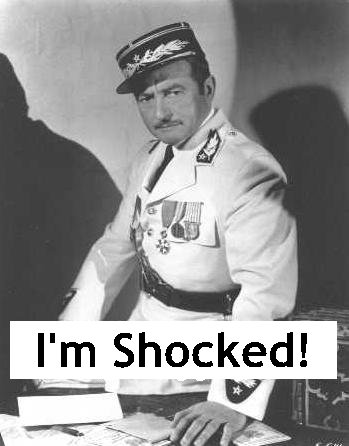
SHOCKED that Kyle Anderson liked a
Doctor Who episode!

Even some of the sillier moments like the archery tournament worked for me because the overall tone of the episode made it work. The constant rivalry between the Doctor and Robin, not to mention the Doctor’s constant irritation at the very idea of the Merry Men, made for a lot of laughs.


He’s grumpy and older-looking but decidedly childlike and petulant about things.

Just like Donald Trump, or "Donald Tramp" as my mother keeps calling him in her delightful malapropism.

Both Tom Riley and Ben Miller were brilliant and gave very funny but not mawkish performances as their respective characters. Robin Hood’s incessant laughter was constantly hilarious to me.

Robin Hood's incessant laugh was constantly irritating to me. Anderson is a fool unto himself. 

This has to rank as one of my favorite Mark Gatiss-penned adventures, up there with “The Unquiet Dead” and “The Crimson Horror.” I can’t wait to see what he does for Series 9.


Next week, it’s a very intriguing-looking episode: “Listen” written by Stephen Thompson and Steven Moffat and directed by the exceptional Douglas Mackinnon and will see the return of Samuel Anderson as Danny Pink. The Doctor doing a bottle episode? Can’t wait!
These Doctor Who episodes are enough to have anyone start hitting the bottle. Second time he cannot wait for a Doctor Who episode.  If I see this one more time...

Monday, May 29, 2017

The Ice Capades Of The Doctor


STORY 269: THIN ICE

We go to the same pattern with Doctor Who on Season Ten that we've seen with the show.

Episode One: Meet the New Companion.
Episode Two: Travel Far Into the Future.
Episode Three: Travel Into the Past, British History Only (far be it for a show about travel through time and space to visit Byzantium when Suleiman was laying siege to the fabled city).

If it sounds like I'm complaining, let me dispel you of that.  Thin Ice, the Episode Three of this pattern, is something that I haven't seen on Doctor Who of late: a smart, well-written, well-acted story.  It had monsters, menace, and a touch of humor.  Overall, Thin Ice is a sign that the hiatus might have done the show a world of good.

The Doctor (Peter Capaldi) and his newest Companion, Bill (Pearl Mackie) aimed to go back to present-day, but ended up in 1814, February 4th to be exact.  It is the last great Frost Fair on the Thames, and Bill is highly concerned about how her race will impact her presence there (slavery is still legal at the time).  The Doctor dismisses her concerns, especially when we see so many black people running around, even being in the military.  He tells her that there's a lot of whitewashing of history and that there were more blacks in history than has been told.

Even Jesus was black, he assures her, a point of debate but I digress.

Bill is also concerned about how her presence could alter the whole of history, how if she steps on a bug there could be chaos in the future.  The Doctor pokes a little fun at her expense about that, but then tells her things will be all right.

Things aren't all right though, after a pickpocket steals The Doctor's sonic screwdriver.  The leader of the urchins, Kitty (Asiatu Koroma) sees her accomplice swallowed up by a monster who encircles its prey with little lights.  The Doctor and Bill also see this and are horrified, though the Doctor is not as broken up about it as Bill is.

He has seen death, and caused it, too many times to be that involved. 


The Doctor and Bill now work to solve this mystery and end the horror (not to mention, save others from a similar fate).   They literally dive in to find beneath the Thames is a giant fish monster, and that it has been feeding off humans.  Kitty also tells them that the urchins are paid to lure people to the Frost Fair, and thus, to the monster (though the children know nothing of the monster itself).

The villain is Lord Sutcliffe (Nicholas Burns) whose family has enriched itself for centuries thanks to the monster, which they keep chained and whose waste they sell to provide power great than that of coal.  Lord Sutcliffe is enraged that Bill would receive him sitting down, and the Doctor is outraged that Sutcliffe would use humans to profit, seeing him as the real monster.

Sutcliffe decides to kill two birds with one stone by having the Doctor and Bill killed with a bomb, and that bomb will bring more food to the chained-up monster.  The Doctor, however, has a few tricks up his own sleeve.  They escape and warn people off the ice with help from the urchins, and when an enraged Sutcliffe sees they haven't been killed he accidentally falls into the water.  The bomb had freed the fish monster and taken Sutcliffe, and the Doctor alters Lord Sutcliffe's will to make one of the urchins his long-lost heir.

Back to the present, Nardole (Matt Lucas) scolds the Doctor for taking this little side trip, reminding him of the Vault that has to be protected at all costs.  Nardole goes down there to hear it knocking, telling whatever is inside that it won't get out.


Thin Ice has a couple of curiosities, particularly due to race.  Bill, as a mixed-race person, worries about how her presence in Regency-Era Britain will make her stand out, but we see many black people at the Frost Fair (Kitty among them).  There is an attempt to cover that by saying that there is more blackness in history (down to Jesus Himself being black) but given that Doctor Who is fantasy, I wonder if the audience would have given it a second thought.

For example, when Lord Sutcliffe became angry at seeing Bill seated in his presence, I put his fury up to class, not race. Put that up to my naïveté, but I didn't think race was that important.  It is also the fact that we see many black actors in Thin Ice in both supporting and non-speaking roles that I wonder if in the end, Bill's race was that important.

I also disliked a scene where we end with Bill about to say, "No sh..." and cut out the rest with a horse's neigh.  It is a family show, and yes, they cut off before Bill could finish saying something, but I'm wary of moments like those.

However, those are minor points, as Thin Ice harkens back to more traditional Doctor Who: an otherworldly mystery, some humor, and a sensible plot (the last being the biggest surprise given how convoluted the show has become).  It has a mild negative in that it harkens back also to another NuWho episode (The Beast Below): a chained-up monster, children in danger, the monster being used/abused by humans, the Doctor releasing it, and all ending well.

Still, what we have in Thin Ice is a good, tight script where the elements came together (a fisherman who appears briefly is tied into the story later on).  We also have some fun with a trope of time-travel shows: the idea that being there will alter the whole of human history.  Mackie's performance underscores the humor in those moments of Bill's worry: her excessive worry being fodder for the Doctor's jabs at her fears.


Mackie does a great job not just in Bill's fears, but in her joy at being in the past and her anger and hurt at the Doctor's curious reaction to a child's death (though again, for a family show, is suggesting a child's death a bit much).  There's a strong sense of tension and fear in Thin Ice, and that comes not just from the script but from the performances.

The Doctor too is in fine form.  Capaldi's mix of regret and remoteness, his anger at the abuse Lord Sutcliffe inflicts, and his teasing of Bill all shape a great performance.  It solidifies my view that Capaldi could have been a great Doctor if not for the scripts.

Burns' Lord Sutcliffe was a bit weak as the villain (he was missing the mustache to twirl) and the character wasn't overwhelming, but that is probably due to the rushed nature of the episode,

Still, despite some weaknesses, Thin Ice is a pretty solid Doctor Who episode, and one of the better ones to come down the pike in a long time.

"Passion fights, but reason wins," The Doctor tells his Companion when explaining why he didn't just take a swing at Sutcliffe to start with.  Many a true word (though if memory serves correct, he does take a swing at him later). 

Humor and horror...on the whole, Thin Ice is pretty strong.


8/10

Next Episode: Knock Knock

Saturday, May 13, 2017

The Happy Face of The Doctor


STORY 268: SMILE

When I learned that Doctor Who was going to build an episode around emojis, those small pictures that many Millennials use to communicate emotions, I was aghast.  It's the lowest point on a show that has had too many low points.  A show about emojis?  Is the show now catering to the fanboys who use these via texts?  I was filled with dread.

Smile, the episode built around emojis, defies low expectations.  It doesn't mean that it is good, or that we don't get a quick resolution and some weak moments.  It just means that there is some logic to using emojis.

The Doctor (Peter Capaldi) offers his newest Companion, Bill Potts (Pearl Mackie), a chance to travel on the TARDIS.  It has to be done a bit under the table, as the Doctor's other Companion, Nardole (Matt Lucas), scolds the Doctor for so much as moving the TARDIS even if it's to avoid taking the stairs.  Nardole tells the Doctor he has to stay on Earth, having made a pledge to do so, especially with regards to safeguarding a vault (which appears to be the recurring theme this season...what's behind Door Number One?).

The Doctor pretty much dismisses Nardole's warnings and offers a chance to show Bill some sight either from the past or the future, and she chooses the future.  With a bit of travel, they arrive on the Earth's first colony, patiently awaiting arrivals.  There is already a native population of sorts there, the Vardy, nanorobots who have literally built up the city.  There are also robots who communicate through emojis.  All this thrills Bill, whose tag has a happy face.  The Doctor's tag shows more questioning, but at least it's not a sad face.

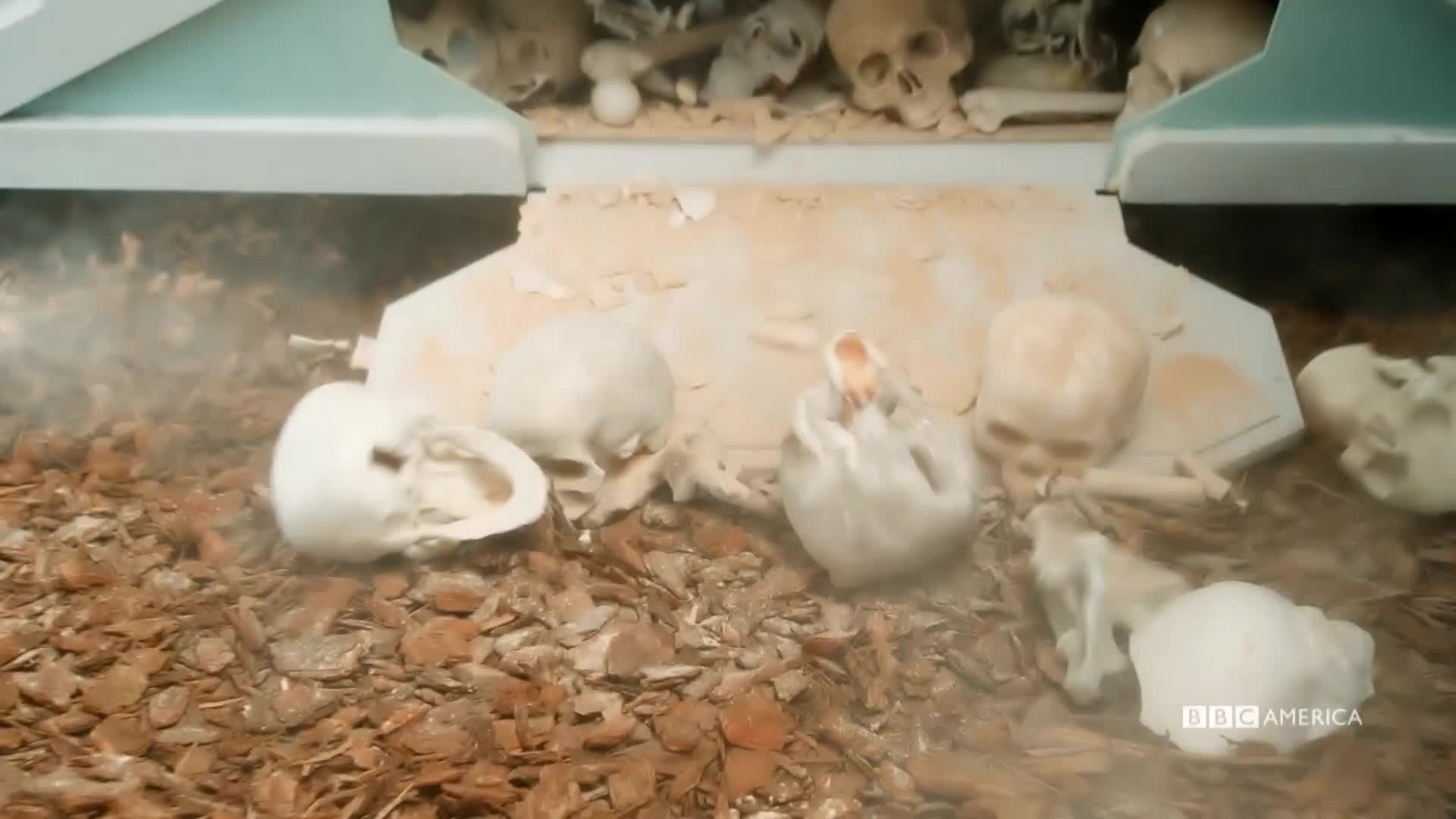
There is some sort of glitch in the system among the robots.  They detect sadness as being bad, so bad that they have to kill you if you aren't smiling.  We know this because was saw some of the crew die as a result of showing grief, but to The Doctor and Bill, all they see is a world ready to be occupied by the colonist.

They soon however put two and two together when they discover what happened to the-now literal skeleton crew.  Fearing that there will be a massacre when the colonists arrive, the Doctor and Bill attempt to blow everything up before they arrive.  Bill, however, makes a few discoveries.

One, she finds the corpse of an old woman and a visual journal detailing the chaos they left behind.  Two, she finds a little boy looking for his Mummy. 

That means that the ship bringing colonists isn't coming.  It's already here. 

The Doctor finds that the emojibots, programmed to have happy colonists, didn't understand sadness and took it for disease that had to be exterminated.  As such, when they saw some showing grief, they were promptly killed.  Worse, the crew has started waking up and when they find the bots are murdering them left right and center, they will attempt to wipe them out, unaware that the nanobots are the real danger, not the emojibots.

The Doctor races to stop them from going to war, and he does so by essentially rebooting the emojibots: setting them back to a default status before they knew what grief and sadness were.  With that, trouble avoided and the two travelers can go back in time for tea. 

Unfortunately, they end up in a frozen Thames, with an elephant walking towards them.

  
I think my issue with Smile is a bit two-fold.  The first part comes from the fact that Smile hits similar themes as a Classic Doctor Who story: the Seventh Doctor story The Happiness Patrol.  Frank Cottrell-Boyce, I don't think, intentionally meant to hit on similar plot points with Smile that were hit on by The Happiness Patrol (people who were killed for not being happy), but in many ways Smile can be called at the least a variation of The Happiness Patrol.

If you want to call Smile a remake, reboot, reimagining, or flat-out rip-off of The Happiness Patrol, that is your business, not mine.

I figure most NuWho fans have never heard, let alone seen, The Happiness Patrol, so they wouldn't think anything was amiss.  Classic Who fans, or at least those with vague or hazy memories of it, might, and that might lead them to look a little askance at Smile.

The second part comes from the quick resolution, one that pretty much would have or perhaps should have come to the Doctor earlier.  It's almost a 'push the magic button' type resolution: all you had to do was reboot the robots and there you go.  It's almost a wonder why the Doctor didn't think of it sooner.

I suppose if he had, there wouldn't have been as much 'tension' as Smile wanted to have.  I didn't feel a great deal of tension for the most part, but when he basically tells us that all that was needed was to restart the system, one almost gasps at both how quick the resolution is and how easy it all was.

This entire 'the colonists are going to war' thing wasn't building up to a great deal.  Perhaps some reworking of Smile might have amped up the tension (such as having the colonists find the skeletons and, becoming enraged, then going off to war, with the Doctor and Bill desperate to stop the chaos).

If it weren't for those two primary elements (and the gruesome nature of the human fertilizer), I think I'd be more inclined to like Smile.  There are good elements, such as both Capaldi and Mackie's performances.  They are working so well together that Lucas can be forgotten (and frankly I wish he were).

Oh, and one last thing.  The name of the colonists' ship, the Erehwon, may be a nod to a novel, but it still spells 'Nowhere' backwards.

Smile did not cater to pop culture trends with the emojibots.  I don't think that in fifty years time we will be able to rewatch Smile without seeing it as slightly dated because of the emojis.  They are ready-made for toys, aren't they?  It wasn't a horror but it could have been more.


5/10

Next Episode: Thin Ice

Friday, May 12, 2017

The Gay Companion of The Doctor


STORY 267: THE PILOT

It's no secret that Doctor Who has been having a bit of a crisis.  Despite the constant propping up of professional sycophants like The Nerdist's Kyle Anderson, who keep telling its readers that the show is still both brilliant and highly popular, the formerly can't-miss sci-fi show has lost a lot of its luster.  Apart from the Christmas Special that met with mixed reviews and interest, Doctor Who has been on hiatus for a year (and for some, not been missed).   The show also has lost its lead, as star Peter Capaldi will have his final season this year.

With all that, we turn to The Pilot (formerly known as A Star in Her Eye), as pun-worthy a title as any we've seen.  For the uninitiated, The Pilot is what you usually call a premiere episode of a new series.  It's as if showrunner and writer Steven Moffat, held in equal terms as a genius and a monster, wants us to think of this season as a fresh start, as if in effect The Pilot were a whole new beginning for the decade-long plus show.  The Pilot also refers to the thrust of the story: aliens who find someone to 'pilot' them out of Earth.  The Pilot also introduces us to a new Companion: Bill Potts, who is touted as the first openly-gay Companion on Doctor Who (Captain Jack and River Song notwithstanding). 

Now, the question to ask is, "Does The Pilot work to restart the show, or is it a case of false branding?"

Bill Potts (Pearl Mackie) serves chips, and is a biracial lesbian (aside: is it me, or does it look like Doctor Who has some sort of list of minorities it feels it has to check off to meet some kind of quota).  She serves chips at the university, where The Doctor (Capaldi) and his other Companion, Nardole (Matt Lucas) have been hiding out (shades of the unfinished Fourth Doctor Shada).  The Doctor is intrigued by Bill (who despite being in her mid to late twenties apparently still lives with her foster mother).  She's not a student but attends his lectures, and her reactions are always different from all the other students.

Taking her under his wings as a mentor, even getting her enrolled at the University, Bill proves a sharp and inquisitive mind.  She also finds herself attracted to Heather (Stephanie Hyman), whom she met at a club and who also goes to the University.  Bill quickly gets involved in the Doctor's mysteries when she follows him and Nardole to where they have a secret vault containing something wicked, and when it comes to Heather, she notices what looks like a star in Heather's eye (which Heather describes as a defect).

 
Heather appears rather obsessed with a puddle and asks Bill to look at it, asking two questions: how can there be a puddle when there's been no rain, and if there is something wrong with her reflection.  Bill doesn't give that much thought, but does sense that something is off.  Shortly after, Heather is at the puddle again, and she promises Bill that she won't leave.

She does disappear however, and Bill is a bit upset about that.  However, something wicked this way comes in the form of a water-dripping Heather, who now pursues Bill with an almost murderous abandon.  The Doctor, Nardole and Bill first go the vault, fearing that Water-Heather is after whatever is in the vault. 

Nope, it's after Bill, and thus the trio fly on a mad race: first to Australia, then to the very edge of the universe, only to find Water-Heather following them.  Finally, the Doctor takes them (and the pursuing Water-Heather) to a place with fire: the war between the Daleks and the Movellans (a nod to the Fourth Doctor story Destiny of the Daleks).  Heather-Water even takes the form of a Dalek, and this hunt has been to try and get Bill to be the passenger.  Over the Doctor's objections, Bill takes Water-Heather's hands and sees the universe, but tells her she has to let go.  Water-Heather does so, and thus ends the crisis.

Back on Earth, The Doctor wants to erase Bill's memory but she pleads to remember for a week, or at least this night (reminding me of Desdemona's plea to Othello, "kill me tomorrow, let me live tonight).  The Doctor doesn't have it in him to wipe out her memory and tells her to run.  Quickly, however, he offers her a chance to go on the TARDIS.


The Pilot is an improvement over some of the horrors of the past few seasons.  Granted, that's a low bar, but at this point, one should be grateful for getting any positives.  A good part of the credit should go to Mackie, working on her first big project as an actress.

I personally don't care whether Bill's a lesbian, biracial, a biracial lesbian, or a biracial lesbian who lost her virginity to a non-binary transgender and celebrated this by doing cartwheels while singing I've Written a Letter to Daddy.  

Her sexuality isn't a major part of the story, at least to me because I didn't believe that she'd be that heartbroken about losing Heather.  I'm going to put her sadness to seeing a person die, not because she lost someone whom she didn't have an actual romantic relationship with.  I didn't buy that Heather was this big love of Bill's life (at certain points, I don't think Heather even knew who Bill was despite meeting at a club).  Yet I digress.

Mackie's Bill is smart, eager for a change, and genuinely pleasant. Her longing for her birth mom, her lack of honesty with her foster mom (who thinks she's straight), and her ability to put things together quickly are all positives in the characterization.

I can do without the comic stylings of both Nardole and Matt Lucas, who didn't have that much to do here (and whose appearance as a full-on Companion is strange to me).  Why he has become so important to the series is something I can't get behind, and some of his comments are cringe-worthy (such as telling Bill to "give it a minute" before going to use the TARDIS toilet).  I think he could have been written out of The Pilot without it affecting the story.  Capaldi does strong work as the not-as-grumpy but still a bit eccentric Doctor, and he brought a sense of tragedy to his role (even if it involved that awful River Song via photos of her and Susan Foreman, whom I know some NuWho fans have no idea who she is).

There were other elements that I didn't care for.  Moffat still cannot resist throwing in a "Doctor Who?" line, or in this case, "Doctor What?".  That pretty much has grown stale to being cliché in any Moffat-penned script.  While I did enjoy hearing Joy Division's Love Will Tear Us Apart (one of the great songs in my opinion), it's another case of something being too on-the-nose to what is going on.

I suppose there was a logic to having Water-Heather being able to fly about through time and space in pursuit of Bill (though seeing Heather all wet wasn't scary as it was slightly amusing). 

I just wasn't overwhelmed with The Pilot, though if it had been an actual pilot it might have scored higher.  I don't think you can ask Who fans to ignore a lot of what has happened, and I don't know that they would even if they were overtly asked like they were with The Pilot.

Neither a horror nor a masterwork, The Pilot is slightly above average.  Given some of the absolute drivel we've been handed, that in itself is almost a miracle.


6/10

Next Episode: Smile

Monday, January 2, 2017

The Extended Universe of The Doctor


STORY 266: THE RETURN OF DOCTOR MYSTERIO

The Return of Doctor Mysterio is the only new Doctor Who story that 2016 will have, the show being on 'hiatus' since the last Christmas special and not scheduled to return until April 2017.  I imagine that this homage/send-up of superhero stories will be enough to stop the downward slide Doctor Who has entered.  I didn't hate The Return of Doctor Mysterio.  I didn't love it either.  It was a non-event, a retread of things we've seen before spoken in other voices, other rooms.

The Doctor (Peter Capaldi) is in New York City and meets a little boy named Grant, who has a cold.  The Doctor is working on some machine that does something and Grant has spotted him.  The Doctor gives him a glass of water that he pulls out of his coat, a red capsule-looking object and says 'take this', then seems genuinely surprised when Grant tells him he swallowed it.  This object grants the being anything he/she/it wants the most.  We find that Grant wants to be a superhero like the ones he reads about in comics.

Many years later, the Doctor, along with his temporary Companion Nardole (Matt Lucas), whom we met in The Husbands of River Song, are back in NYC, investigating the Harmony Shoals Company.  Here, he meets plucky journalist Lucy Fletcher (Charity Wakefield), who also suspects there's something sinister at Harmony Shoals. As the villain threatens them with a gun, enter The Ghost (Justin Chatwin), a Superman-type who speaks like Christian Bale's version of Batman.  Everyone is shocked at his appearance, and after temporarily disabling the villain, The Ghost takes Lucy in his arms and flies her away.

The Ghost is really Grant as an adult, who attempts to balance his superhero duties with his main job: a nanny.  Not just any nanny, but nanny to Lucy's child.  Grant can fool everyone, with his soft manner and glasses, but not The Doctor, who knows immediately who The Ghost is.  Who else in NYC has superhero powers thanks to him?  The Doctor is displeased that Grant is using his powers despite Grant's promise not to, and even a flashback where in middle school The Doctor again counsels him not to doesn't help.  It does help us find that Grant has always been in love with Lucy but too shy to approach her.  Whether SHE remembers Grant at all is unclear.


The villains are a nefarious alien group made up of literal brains, who are stealing bodies as part of an invasion of Earth (anyone yawning at this point?).  The Doctor and Nardole begin disrupting Harmony Shoals' worldwide plan (in Tokyo, he unleashes Pokémon in the lobby) and Nardole proves surprisingly adept at piloting the TARDIS (with a brief, accidental stop in Byzantium, where he somehow ruled as Emperor, complete with robes).

Grant/Ghost has a hard time balancing his two worlds, running back to Lucy's flat every time the baby starts crying, and Lucy is completely unaware that Grant is The Ghost.  At a rooftop interview the romantic vibes are going when the villains show up.  They want The Ghost's body, the perfect place to place the master brain I guess.  The Doctor and Nardole, for their part, are on a spaceship trying to stop an invasion...that has already happened.  The spaceship is a Reichstag Fire-type incident, which will destroy New York and have world leaders scurring to Harmony Shoals for protection, where they'll have their brains replaced and thus, conquest.

The Ghost manages to stop the crashing spaceship, even if it means revealing his true identity.  Lucy doesn't care...she's in love.  The Doctor and Nardole for their part, are off again, the Doctor still deep in mourning for his favorite slut, River Song.

Perhaps it should be worth nothing that "Doctor Mysterio" is what Doctor Who is called in Spanish-speaking countries, so The Return of Doctor Mysterio could be metaphorically translated as The Return of Doctor Who.  Isn't writer/showrunner Steven Moffat such a clever, witty man?   

I understand Mark Gatiss, who has written for Doctor Who and works with Moffat as co-creator/writer/actor on Sherlock (a show I find similarly overrated and exaggeratedly praised), cried when he read The Return of Doctor Mysterio.  I wonder if he cried out of laughter or at the shock of finally seeing what he and Moffat had done to Doctor Who. 

Doctor Who was once science fiction.  Now it's just farce. 

Doctor Mysterio wasn't awful in a Husbands of River Song or Sleep No More way.  It just wasn't anything really.  Too many critics are giving Doctor Mysterio a pass because as a Christmas special, they argue that it should be lighter, almost irrelevant to any other story.  I argue that while a Doctor Who Christmas special can be lighter, it still is part of Canon and should be treated as any other Doctor Who story regardless of season. 

There is a fine line between homage and rip-off or even send-up, and Doctor Mysterio is flat-out a rip-off of Superman: The Movie.  I will grant that I figure Moffat (and those watching) were fully aware of this.  However, the entire rooftop interview, complete with Lois Lane, eh...Lucy Fletcher (or her nom de plume, Lucy Lombard) was virtually stolen from Superman.  It shows a total lack of originality because Moffat didn't play with the conventions, he didn't try for anything new.  Instead, he figured it would be easier to just recreate the scene virtually verbatim (I was waiting for Lucy to start singing Can You Read My Mind?).

Superman took its time to establish the overall mythos of The Man of Steel.  Doctor Mysterio didn't have that luxury, OK, so it was easier to lift so much from Superman with the expectation that the audience would know the references.  This is curious since perhaps there was someone like The Doctor, who was unaware that Superman & Clark Kent (openly mentioned in Doctor Mysterio) were one and the same, and had apparently never heard of Spider-Man.

How curious that the 10th Doctor was well-versed in pop culture (the ending of Harry Potter and the Deathly Hallows made him cry), but the 12th (in 14th Form per Kyle Anderson at The Nerdist) has never heard of Superman, or Spider-Man, or the film Alien from Last Christmas. 

Was The Return of Doctor Mysterio meant to be a spoof of Superman?  At times it played like that (when The Ghost is being interviewed at a fire, he ends by practically leaping out of the television screen, points his fingers, and shouts, "So, GET A SMOKE DETECTOR!" in a camp way that is a little cringe-inducing).  Over and over again, Doctor Mysterio was too enamored of being Doctor Who: The Superman Edition to be Doctor-centered.  As is the case with much of current Doctor Who, the Doctor himself was not the central character. 

It is Grant/The Ghost and his love story with Lucy, which again isn't all that interesting given we've seen it before and seen it done much better.

It is also a bit of a puzzle how The Ghost doesn't immediately recognize the Doctor when he's seen him twice, or how Lucy doesn't put the Ghost and Grant together, not because Grant wears glasses, but because their voices are eerily similar.  If we go into Superman: The Movie's Clark Kent/Superman, Christopher Reeve made that distinction believable because his whole manner of being when he was Clark Kent (bumbling, insecure, timid) was wildly different than when he was Superman (strong, confident, powerful).  Clark even moved differently: head close to his chest, as if trying to hide, while Superman stood tall and erect.  There wasn't all that much difference between how Grant and The Ghost were, so it wasn't that hard to put two and two together.

The voice again is what bothered me.  Justin Chatwin's voice was not that different from when was Grant and he was The Ghost, so I wondered why Lucy couldn't get it.  Then again, Lucy, from what the story presented, thought The Ghost wasn't real, so when he smashes into Harmony Shoals was the first time they had actually met.  Still, there wasn't that much deviation in Chatwin's voice (a very strong baritone, a touch gravelly), so why didn't she at least wonder.  Lois Lane to her credit in Superman and Superman II at least wondered if Clark and Superman were the same. 


The performances were acceptable, nothing that was incredible.  Chatwin made for a competent Superman/Batman knock-off with 'typical' powers, though as Grant he was flat and uninteresting.  Wakefield was also acceptable as the reporter who was nothing more than the love interest.  Lucas is not someone I care for, but Doctor Who at least made a wise decision in toning his uber-idiot Nardole down from his last appearance in The (Many) Husbands (and Wives) of River Song.  Surprisingly, Nardole managed to pilot the TARDIS quite well (given he's still a bit of an idiot/comic relief) and was actually much smarter as a Companion than some of The Doctor's previous ones (looking at you, Rory "Pond").

As a side note, how did Nardole manage to pilot the TARDIS so well?

We still had to have him dressed up as a Byzantine Emperor for no other reason than to have a 'funny costume' and had to throw in pop culture references that will date the show immediately (a little Pokémon Go nod...in a few years when that fad wears out and people forget it, viewers of The Return of Doctor Mysterio will have to go online to find out what they're talking about).

The alien menace never felt as if it were a genuine threat for two reasons.  One, we've seen it all before (alien invasion of Earth...seriously, can they come up with nothing else).  Two, the Grant/Ghost-Lucy story was the one they really cared about, so the aliens seemed a bit of an afterthought, as if they needed to be there because Doctor Who should have some extra-terrestrials in it.

We got the Doctor creating a machine in the beginning for some reason, but what happened after Grant took the device that granted him powers we know not; in fairness to young Grant, any child would have mistaken the device as medicine given the Doctor gave him a glass of water and instructed him to 'take this' as opposed to 'hold this'...and that glass of water business being pretty dumb to begin with.

Guest star Capaldi did what he could, making the Doctor a bit of a frantic yet slightly dimwitted figure (he snacks on sushi while casing Harmony Shoals, just because he wants a little snack, and is apparently unaware that New York City isn't a capital.  It takes Nardole to point that out to him).

The Return of Doctor Mysterio is nothing special, nothing original. Repetitive of past Doctor Who stories (alien invasions, smarter Companions, the Doctor as secondary player in eponymous show, even with a "Doctor Who?" line that Moffat clearly cannot resist), of Superman: The Movie (scenes and bits of dialogue lifted from the film), it is forgettable, disposable, and with hints of future returns that may not pan out (a shout-out to the lousy character of Osgood and one of the aliens taking over a UNIT member's body, though when and how...irrelevant).

Ultimately, The Return of Doctor Mysterio is...nothingness itself.  A better title for this special would have been Doctor Who in Superman Meets Invasion of the Body Snatchers.


1/10

Next Episode: The Pilot (formerly A Star in Her Eye)